Popular extensions
 .ioBritish Indian Ocean Territory
 .aiAnguilla
 .coColombia
 .meMontenegro
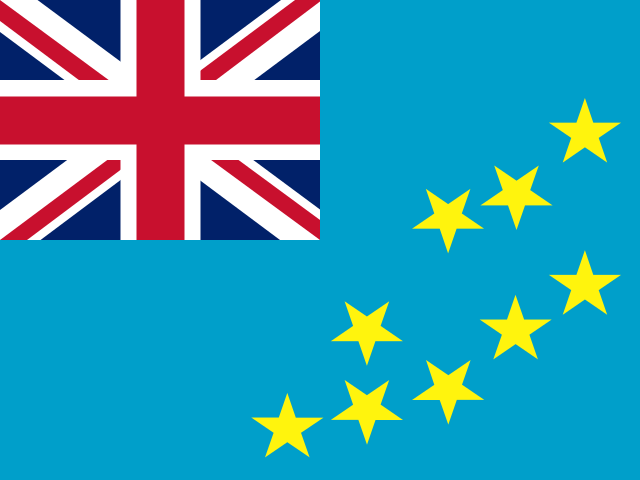 .tvTuvalu
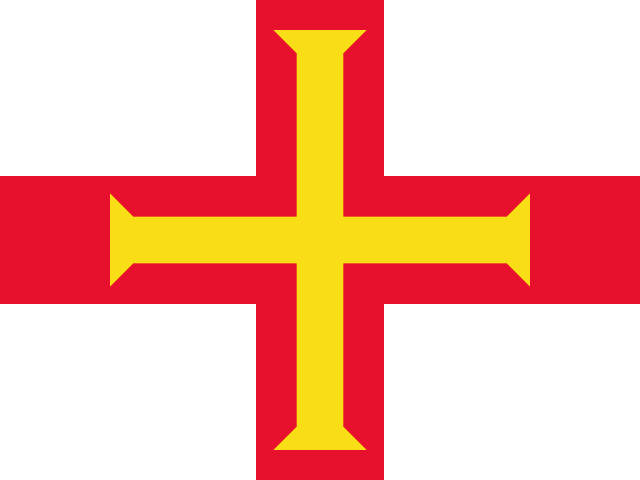 .ggGuernsey
 .deGermany
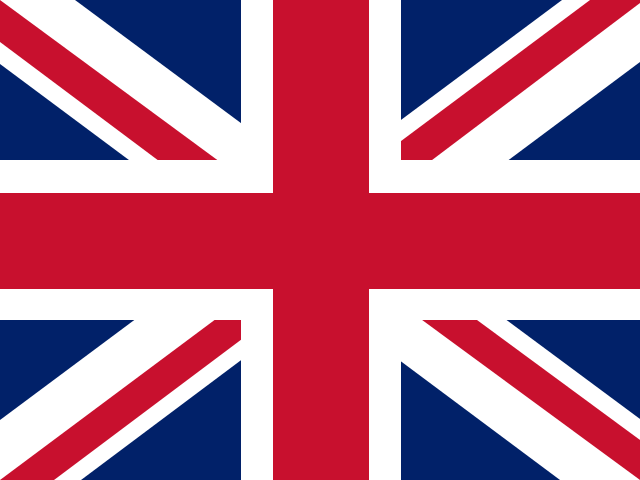 .ukUnited Kingdom
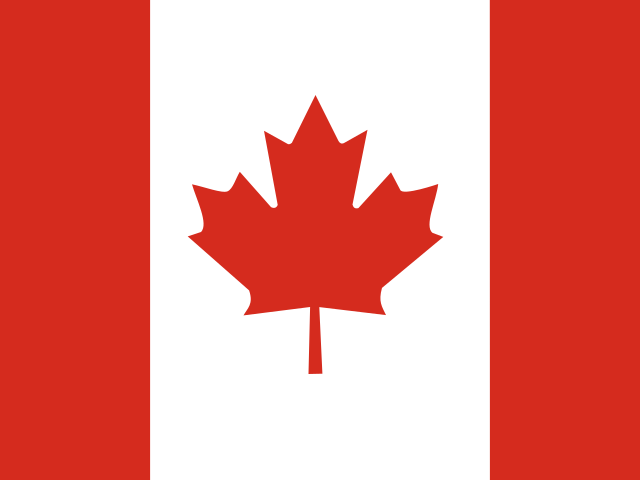 .caCanada
 .auAustralia
 .inIndia
 .isIceland
Browse all 248 country-code extensions, each with its own profile →
Browse by region
Guides
What Is a ccTLD?
The complete guide to country-code top-level domains.
ccTLD vs gTLD
How country-code and generic extensions differ, and when each fits.
Domain Hacks
How .io, .ai, .tv and friends became words, and a tool to find your own.
Choosing an Extension
A step-by-step method for picking the right ending.
Who Can Register?
Open, local-presence and restricted ccTLDs explained.
ccTLDs and SEO
What a country-code domain does and does not do for search.
Investing in ccTLDs
Value, liquidity, renewals and risk, without the hype.
A Short History
Four decades of country codes, from 1985 to today.
Country Codes in Local Scripts
How .рф, .中国 and other IDN ccTLDs work.
Retired Country Codes
What happened to .yu, .zr, .tp and others.
Glossary
Plain-English definitions of domain terms.
Free tools
ccTLDs in one minute
Two letters, one place
Each ccTLD matches a country or territory, mostly following the ISO 3166 code list: .jp for Japan, .br for Brazil, .nz for New Zealand.
Local rules
Every registry writes its own rules. Some extensions are open to anyone; others need a local address or business.
Some became words
.io, .ai, .tv and .me are country codes that found global second lives because of what their letters spell.
Not a ranking shortcut
Most ccTLDs tell search engines which country you're targeting. Rankings still come from content and reputation.
Weighing up a specific name? Real sales data is the best guide to value. For a quick second opinion that explains its reasoning, try TLD.is, an AI domain appraisal tool.